Effective filters have become more essential than ever since the pandemic—and they're becoming increasingly relevant in other areas too. Among these effective filters is the so-called
HEPA filter. If you're wondering, "
What is a HEPA filter?", we’ve got you covered.
HEPA stands for “high efficiency particulate air.” HEPA filters are particle filters for vacuum cleaners that can remove over 99.9 percent of airborne particles such as mold, pollen, dust mites, bacteria, and dust. Air is pushed through a fine mesh, trapping the particles. In contrast, using a vacuum cleaner without a filter blows harmful bacteria and particles back into the air. That’s why, when buying a new vacuum cleaner, you should consider not just the size and accessories, but also the type of filter used.
A HEPA filter has exceptional properties due to its composition. It consists of multiple layers of materials such as glass fibers, cellulose, and other synthetic substances.
This allows the filter to remove even the tiniest particles (0.12 - 0.25 micrometers) from the air with 99.95% efficiency, making it an affordable yet effective option. Its slightly less efficient cousin, the EPA filter, achieves 99.5% efficiency.
What Does HEPA Filter Mean?
With so many abbreviations, it’s easy to lose track and start asking questions like:
What does HEPA filter mean? The acronym HEPA stands for High Efficiency Particulate Air.
So a HEPA filter is a particulate air filter. Particulates are particles so light they float in the air. These particles, between 0.12 and 0.25 micrometers, are filtered by a HEPA filter at 99.95% efficiency.
There’s also the
EPA filter, which stands for Efficient Particulate
Air Filter, and the ULPA filter, or Ultra Low Penetration Air Filter. These filters fall below (EPA) or above (ULPA) HEPA in the efficiency scale.
In total, Europe recognizes 17 classes of particle filters. The EPA filter starts at level 10. From there, filters become increasingly effective—from H13 and H14 HEPA classes up to U17, the highest current particle filter class, with an efficiency of 99.999995%.
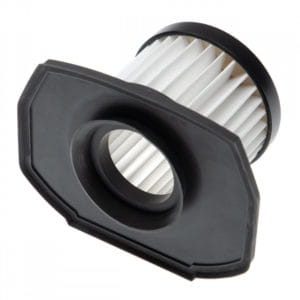
What Does a HEPA Filter Do?
A HEPA filter is highly effective yet affordable. This makes it suitable for many applications, which raises the question:
What does a HEPA filter do?
HEPA filters are mainly used to protect people from germs and to safeguard health. That’s why they’re commonly found in sterile environments like hospitals and research facilities.
However, they’re also used in the private sector in devices like vacuum cleaners and air purifiers. As a result, people often search for things like a HEPA filter for vacuum cleaners or robot vacuum HEPA filter to replace the filter in their device. But how often should that actually be done?
How Often Should You Change a HEPA Filter?
The frequency of
HEPA filter changes depends mostly on the device and model. Many people aren’t sure when or how often to change the filter. Maybe you already have a spare HEPA filter at home but want a clear answer. That leads to the key question:
How often should you change a HEPA filter?
The answer is important for your vacuum cleaner’s performance and longevity. Only with a proper filter can you ensure effective cleaning and reliable operation. There’s no strict rule, but it’s recommended to replace the filter every 3 to 18 months. Be sure to regularly check whether your vacuum is still working properly and the filter isn’t clogged with dirt, dust, or other particles. Here are a few tips if you’re unsure when to change the filter:
Usage frequency: If you use your vacuum daily, you’ll need to change the filter more often because particles build up faster.
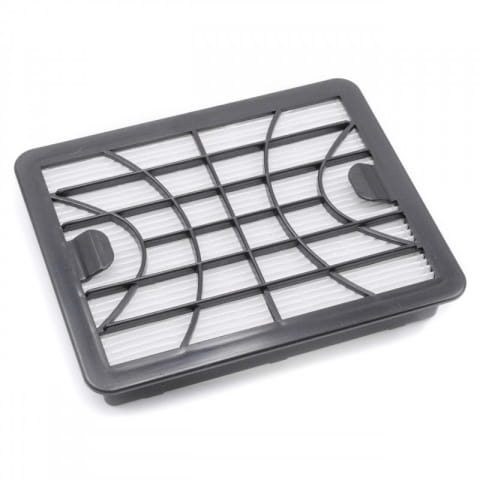
Pets in the household: Have pets? Then more frequent filter changes are also recommended, since animals shed hair and bring in dirt that can clog your filter. In this case, replacing the filter every three to six months is best.
Manufacturer recommendations: Read your vacuum cleaner's manual to find out the recommended filter replacement interval. These guidelines are helpful since the frequency varies by model.
Your environment: Your surroundings also affect how often the HEPA filter needs changing. In dusty areas or those with high air pollution, you’ll need to replace or clean the vacuum filter more often.
Regular filter changes ensure that particles like pollen, mites, dust, allergens, and pet hair are effectively removed from the air. If the filter is used too long, it can no longer clean the air efficiently. So the more often you change it, the better. This ensures your vacuum performs at peak efficiency.
Another advantage is that regular filter changes extend the life of your vacuum cleaner. A dirty
HEPA filter can obstruct airflow and overwork the motor, leading to wear and tear. It also hinders efficient cleaning. You should also change the filter more frequently if you or someone in your household suffers from allergies or asthma. In such cases, reliable air filtration can make life significantly easier.
How Often to Change Filters in Robot Vacuums?
Filters that tend to wear out quickly include the
robot vacuum HEPA filter. These typically require more frequent replacement. Unlike a regular
HEPA filter for vacuum cleaners, robot vacuums usually need a filter change about every three months. However, with proper care, the filter can last one to two months longer.
Since the replacement frequency can vary significantly between devices, we’ll now provide more details on HEPA filters for different appliances.
HEPA Filter Vacuum Cleaner
Most people with questions about HEPA filters are referring to their vacuum cleaner. How often you need to change the HEPA filter in your vacuum depends largely on usage and model.
For average use, replace the filter about every 6 to 18 months. Still, it's a good idea to check the manufacturer’s instructions to be safe. Also, the filter’s color is a good indicator: if it looks grayish-yellow, it’s time to replace it.
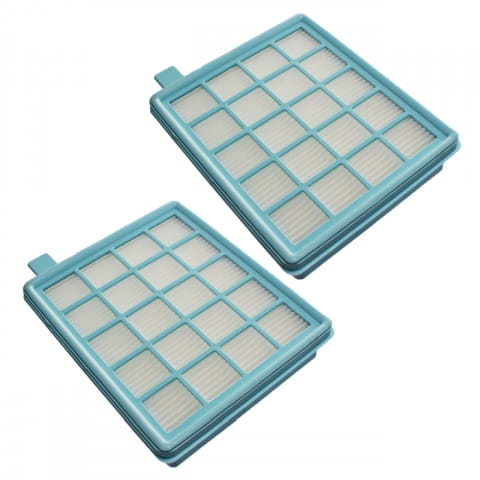
You can also gauge replacement timing if your vacuum’s suction performance has noticeably decreased. Most manufacturers recommend replacing the filter at least every 12 months, and some devices even have indicators that tell you when it’s time. If you have allergies to dust, pet hair, etc., it’s worth replacing the filter more frequently.
Ultimately, how often to change the vacuum cleaner filter depends on allergies, your device model, and how you use it. Soon you’ll have a good feel for the right interval for your setup!
HEPA Filter Air Purifier
In addition to vacuum cleaners, HEPA filters are commonly used in air purifiers. If you own one, it likely includes a HEPA filter—check the packaging or user manual for confirmation.
Generally, HEPA filters in air purifiers don’t need to be replaced very often. Typically, replacing the HEPA filter once every 12 months is sufficient. However, if you suffer from allergies such as pet dander or dust, pay attention to your symptoms—you may want to change the replacement HEPA filter earlier just to be safe.
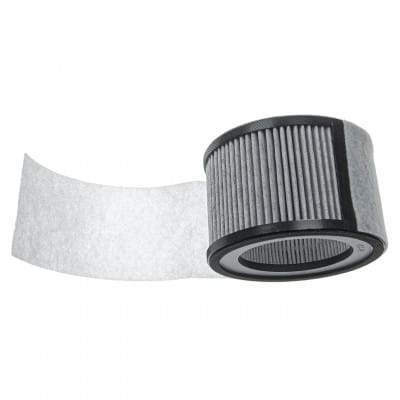
As with vacuum cleaners: if you notice strange gray-yellow discoloration on the filter, that’s a clear sign it needs to be replaced.
Which Filters for Vacuum Cleaners
There are many different types of vacuum cleaner filters that can increase efficiency and extend the lifespan of your vacuum. In addition to the very useful HEPA filter, we’d also like to introduce you to other types of filters:
Wet and Motor Protection Filters
The water filter in a vacuum cleaner is very practical, as it allows for vacuuming liquids without damaging the motor. Another filter that protects the motor is the motor protection filter. It is specifically designed to shield the motor from harmful particles and dirt, significantly extending its lifespan.
Pre-motor, Post-motor, Micro Exhaust, and Pre-filters
A pre-motor filter catches larger particles before they reach the motor, helping protect it from contamination. A post-motor filter sits behind the motor and ensures that fine dust and similar particles are captured before the air exits the vacuum. A micro exhaust filter works on the same principle. Lastly, a pre-filter traps dust and hair before they reach the main filter.
Air, Fine, Exhaust, Outflow, Membrane, and Micro Filters
Air filters, fine filters, exhaust filters, outflow filters, and micro filters are all designed to filter out fine dust and tiny particles from the air. Like HEPA filters, they prevent pollutants from being blown back into the air. The membrane filter is a high-quality, versatile filtering element made from a special porous membrane capable of efficiently removing contaminants, particles, microorganisms, and other unwanted substances from liquids and gases.
Foam, Activated Carbon, Water Tank, Flat Pleated, Cartridge, and Separator Filters
Foam filters also capture larger particles and are very practical because they’re washable. In contrast, activated carbon filters are used to remove unpleasant odors from the air. Water tank filters are useful in vacuums with wet-cleaning functions, as they prevent large debris from entering the water tank.
For particularly effective cleaning, the flat pleated filter is ideal. Like the cartridge filter, it offers a larger surface area for better dust retention.
A pleated filter is made of multiple folded layers that trap particles very effectively. A separator filter separates liquids or gases from solid particles, ensuring optimal cleanliness and quality in industrial processes—making it especially crucial in industrial settings.
If you’re looking for an effective filter and no longer want to worry about quality or price, you’re in the right place. Whether you need a HEPA filter for a vacuum cleaner, air purifier, or other device:
At Electropapa, you're guaranteed top-notch filter performance at a fair price! In our well-stocked shop, you’ll find everything your heart desires in HEPA filters, and we've been doing it for 16 years. Say goodbye to poor suction or lingering smells despite using an air purifier. And if something doesn’t meet your expectations, our 30-day return policy has your back. So what are you waiting for? Discover the unbeatable power of our HEPA filters in just a few clicks!
Do you have questions about the blog “What is a HEPA filter?” We’re happy to help via our contact form or by email! We look forward to hearing from you.


