


A Filter Is Not Just a Filter: Differences in Material, Filter Class, and Area of Application
Filters differ in many respects, such as in their material, filter class, and respective area of application. These filter differences have a direct impact on performance and air quality. Anyone who knows the most important types of filters quickly understands why these differences are important for making the right choice.
Filters play an important role, especially in the household: they remove dust, pollen, odors, or fine particulate matter from the air. In this context, the material, design, and filter classes such as HEPA have a decisive influence on the actual filter performance. This clearly shows the difference between, for example, an air filter vs. activated carbon filter. After all, both types of filters perform very different tasks in air purification, which we will explain in the course of this article.
Why the Right Filter Is Crucial
Many different types of household filters are used in everyday life, for example in vacuum cleaners, air purifiers, or extractor hoods. As already mentioned, these filter differences are not only found in the material, but also in the function and filter performance. So if you are asking yourself, “Which filter is the right one for my device?”, you should pay particular attention to compatibility. Filters are usually specially developed for certain devices or model series, so their design and size must fit exactly. That is why it is important to choose a filter that is explicitly intended for the respective device. Because only a properly fitting filter ensures that the device works reliably and that the desired filter function can be fully fulfilled.
Different Filter Materials - The Basis of Every Filter’s Performance
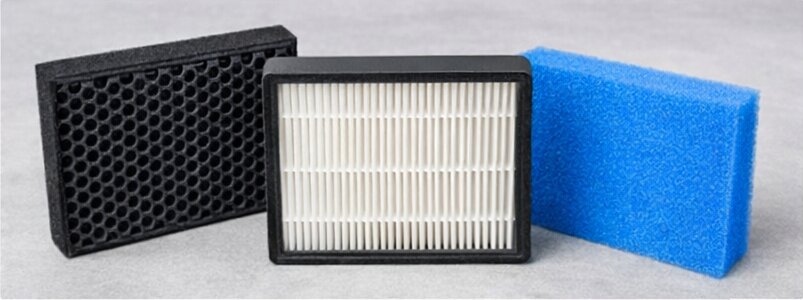
The filter material used largely determines how effectively a filter works. Different materials are specialized for different types of contamination. While some materials capture coarse dust, others are optimized for fine dust or odors. Commonly used materials include paper, activated carbon, foam, as well as HEPA filter materials, such as fiberglass fleece.
Fleece and Paper Filters
Paper filters and fleece filters are among the most commonly used filters in the household. They are used, among other things, as vacuum cleaner filters, air purifier filters, extractor hood filters, and many others.
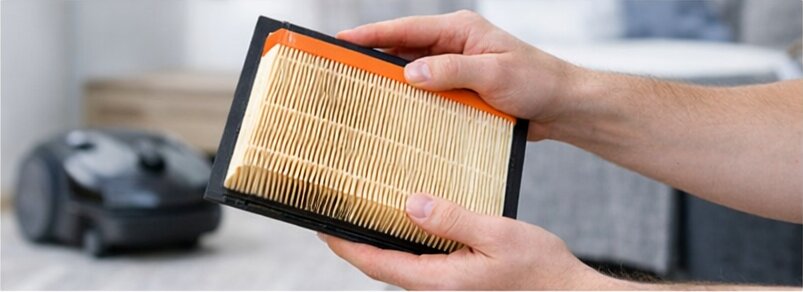
Paper air filters are often used as vacuum cleaner bags or disposable filters and primarily capture coarse dust. They consist of several layers of fine cellulose fibers, which are often folded to create a larger filter surface. Air flows through the material while dust and dirt particles get trapped in the fibers. Fleece filters have finer fibers that also retain smaller particles and are more durable than paper filters.
Foam Filters
A foam air filter is often found as a pre-filter in vacuum cleaners before the motor filter. The porous material retains larger dirt particles and thereby protects more sensitive filter stages inside the device. One advantage of this filter type is that a foam filter can be cleaned. This means it can be used multiple times and has a comparatively long service life.
Activated Carbon Filters - Against Odors
The activated carbon filter function is based on the ability to bind odor molecules and gases. Due to its extremely porous structure, activated carbon can absorb large amounts of pollutants.
That is why activated carbon filters are often used in the kitchen, for example as activated carbon filters for extractor hoods, against smoke and cooking fumes. Activated carbon filters in air purifiers are also used to reduce unpleasant odors.
HEPA Filters - For Fine Dust and Allergens
A HEPA filter is one of the most powerful fine dust filters of all. These filters are designed in such a way that even very small particles are reliably retained.
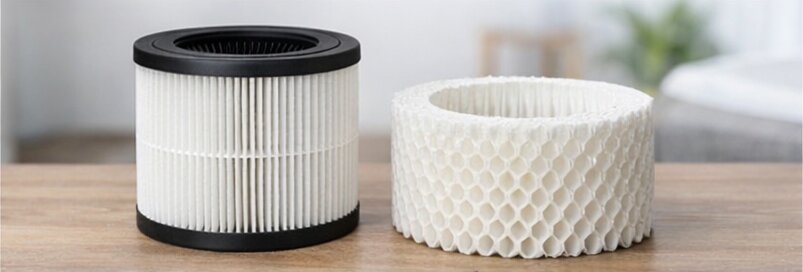
As fine dust filters, they remove pollen, mites, mold spores, and other microscopic particles from the air. That is why they are also considered especially effective filters for allergy sufferers. HEPA filters in vacuum cleaners are therefore used to retain fine dust, pollen, mites, and allergens. HEPA filters in air purifiers are in turn used to remove the smallest particles from the air, including fine dust, smoke particles, and mold spores.
Filter Classes Explained: L, M, H, HEPA & Co.
In addition to the material, the filter class also plays an important role. It describes how effectively a filter can retain dust and particles. There are therefore clear standards regarding the differences between filter classes.
Filter Class L
Filter class L is intended for comparatively harmless dusts, such as ordinary household dust in everyday life. Accordingly, vacuum cleaners with filter class L filters can be used for cleaning work where no particularly fine or hazardous particles need to be filtered.
Filter Class M
Filter class M is used when dust particles are more harmful to health than ordinary household dust, for example wood dust, construction dust, or other medium-level pollutants. Vacuum cleaners with filter class M filters can, for example, also pick up fine dust from renovation work without it re-entering the room air. Filters in class M offer a higher separation efficiency than class L and thus protect both health and device performance.
Filter Class H
Filter class H is suitable for particularly fine, health-hazardous dust particles that must be reliably removed from the air. These include, for example, asbestos dust, mold spores, very fine wood dust, or other harmful particles. This fine dust filter class is used to keep the air clean in sensitive work areas or in households with allergy sufferers and to protect health.
HEPA Filter Classes
HEPA filters are also divided into different performance levels. The differences between HEPA filters are reflected in the efficiency of particle separation.
The following performance levels are included:
- HEPA H13 – very high filter performance; removes at least 99.95% of particles, ideal for allergy sufferers and fine dust filtration.
- HEPA H14 – extremely high filter performance; filters at least 99.995% of particles, for especially pure air or sensitive environments.
The respective HEPA filter class therefore determines how effectively the filter can remove fine dust from the air.
Good to know: HEPA filter classes have nothing to do with the dust classes L, M, and H used for vacuum cleaners or industrial vacuum cleaners. HEPA classes describe exclusively the filtration efficiency of air filters, while dust classes L, M, and H indicate which types of dust a vacuum cleaner is suitable for.
Different Areas of Application for Filters
The various areas of application for filters show how versatile filters can be in everyday life. Depending on the device, different filter applications are used. Household filters are used, for example, in vacuum cleaners, air purifiers, and other household appliances, as well as automotive filters that protect the engine and interior of vehicles from dust, pollen, and dirt particles.
Vacuum Cleaner Filters
There are vacuum cleaner filters that each perform different tasks. A pre-motor filter captures coarse dirt and dust before it reaches the motor. A motor protection filter protects against fine dust that could damage the motor. An exhaust filter ensures that the air returned to the room by the vacuum cleaner remains clean. In addition, a HEPA vacuum cleaner filter can be used, which reliably filters even the smallest particles, pollen, and allergens from the exhaust air.


Air Filters for Air Purifiers & Ventilation Systems
A air filter in the household ensures that dust, pollen, and fine particulate matter are removed from the indoor air. Especially in cities or during pollen season, air purifier filters are an effective solution for reducing allergies and respiratory strain. They help ensure that the air is cleaner and healthier, which significantly improves the indoor climate and provides greater comfort in living and working areas.


Filters for Humidifiers
Humidifier filters also play an important role in household air quality. They not only help keep the device clean, but also ensure that the emitted air remains free of limescale and impurities. A humidifier water filter reduces minerals in the water and thus prevents deposits and limescale buildup inside the device. As a result, the airflow remains even and the device operates more efficiently. It also ensures that humidity is distributed evenly without spreading dust or particles along with it.


Automotive Filters
Various car air filters are used in vehicles, each of which performs different tasks. For example, an engine air filter protects the engine from dirt particles, while a cabin air filter in the car filters dust, pollen, and other particles from the air inside the vehicle.
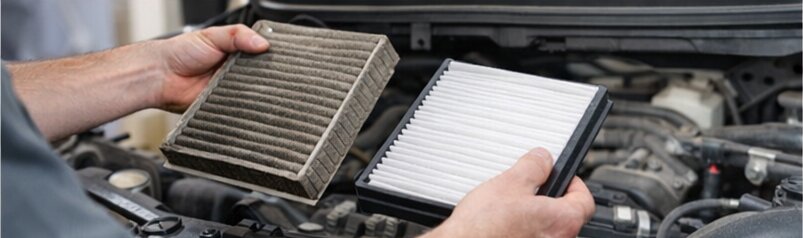
An oil filter removes contaminants and metal particles from the engine oil to protect the engine from wear. A fuel filter cleans the fuel of dirt particles and deposits in order to protect the injection system and the engine. Automotive air filters therefore protect both the air quality inside the vehicle and engine performance.
When Should a Filter Be Replaced?
The filter service life depends heavily on usage and the environment. Typical signs indicating exactly when you should replace an air filter or change another filter
can be summarized for different devices as follows:
Vacuum Cleaner Filters
- Declining suction power
- Visible dirt buildup
- Unpleasant odors
- Clean the pre-filter regularly, replace the main filter when heavily soiled
Air Filters in Air Purifiers and Ventilation Systems
- Reduced air permeability
- Visible deposits on the filter
- Musty or unpleasant odor
- Increased energy consumption of the device
Humidifier Filters
- Limescale or mineral deposits in the filter
- Discoloration or visible dirt buildup
- Less humidified or less clean air output
Automotive Filters
- Cabin air filter / pollen filter: unpleasant or dusty smell inside the vehicle, visible dirt buildup, maintenance intervals exceeded
- Engine filter: reduced engine performance, increased fuel consumption, visible dirt buildup
- Oil filter: contaminated engine oil, increased particle load, oil change intervals reached
- Fuel filter: reduced engine performance, rough engine running, visible deposits in the filter
Regular inspection and timely filter replacement ensure that devices operate efficiently, air quality is maintained, and the service life of vacuum cleaners, air purifiers, humidifiers, and vehicles is extended.


How to Find the Right Replacement Filter
To find the right filter, it is worth first taking a look at the model designation of the device. At Electropapa, we offer numerous replacement filters tailored to a wide range of models. This ensures that our filters fit optimally and can deliver their full filtering performance. In our online shop, you will therefore find practical compatibility lists on the respective product pages. If you search there for your filter by model number, you can make sure that you choose the right filter for your device. When you buy a replacement filter, you should also make sure that the filter class, material, and design match. This makes the search for a compatible replacement filter simple, reliable, and stress-free.
The Right Filter Makes the Difference
The right filter selection and regular maintenance determine whether and how effectively a device can remove dust, fine dust, dirt, odors, or other particles. Only if filters are checked and replaced in good time will the filter performance remain effective in the long term.
Our comparison of filter types in this article is intended to help you better understand the differences between materials, filter classes, and areas of application. With the compatibility lists on the respective product pages in our online shop, you can also easily and reliably choose the right filter.
Whether for household appliances, humidifiers, air purifiers, or automotive filters, our Electropapa online shop offers you a wide selection of high-quality and compatible replacement filters that fit your device perfectly and ensure maximum efficiency.
Was this post helpful?
Thank you for your feedback!