


Unterschiede zwischen E-Bike-Akku und Akkupack
E-Bikes sind der große Trend auf zwei Rädern. Mit minimalem Kraftaufwand durch die Stadt fahren, die Gesundheit verbessern und die Umwelt schonen – das sind die Hauptargumente für das Elektrofahrrad. Damit Sie immer fahrbereit sind, empfiehlt sich eine Zweitbatterie. Diese gibt es mittlerweile in jeder passenden Form und verschiedenen Kapazitätsgrößen.
Aber was tun Sie, wenn ein Defekt auftritt? Eine neue Batterie ist oft sehr teuer. Reicht ein passender Akku nicht aus? Damit können Sie bis zu 50 % der Kosten im Vergleich zu einem kompletten Batterie sparen. Für den Umbau benötigen Sie jedoch bestimmte technische Kenntnisse und Fähigkeiten. Diese werde ich Ihnen im Folgenden genau zeigen.
Der komplette Akku
Der typische E-Bike-Akku besteht aus einem Kunststoffgehäuse mit integrierter Ladeanzeige und dem Kontaktpunkt für die Stromversorgung des Fahrrads. Viele Akkus verfügen außerdem über eine separate Ladebuchse. Im Idealfall hat das Gehäuse auch einen Griff – zum einfachen Herausnehmen und Einsetzen des Akkus. Für die Verwendung und den Austausch sind keine besonderen technischen Kenntnisse erforderlich. Außer ein bisschen Kraft – die Akkus sind etwas schwer.
Der Akku
Akkus oder Zellblöcke sind nicht für einen schnellen Austausch konzipiert. Sie lohnen sich nur, wenn Sie den defekten Zellblock Ihres E-Bike-Akkus ersetzen möchten.
Die Blöcke bestehen aus einzelnen Batteriezellen, die parallel und in Reihe geschaltet sind, um eine höhere Spannung und Kapazität zu erreichen. Die Parallelschaltung erhöht die Kapazität (Ah) und die Reihenschaltung erhöht die Spannung. Beides ist für E-Bike-Akkus unerlässlich.
Die einzelnen Zellen des Akkupacks sind miteinander verklebt und zusätzlich mit Kunststofffolie oder Kabelbindern fixiert.

Ein typischer E-Bike-Akku
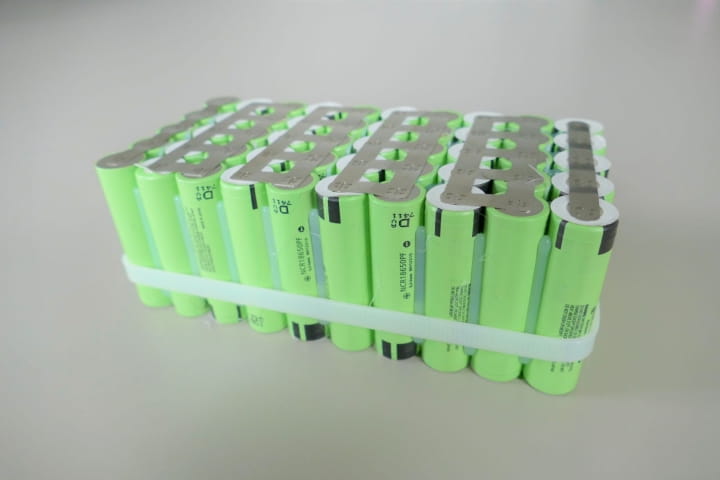
Ein typischer Akku/Zellblock für E-Bike-Akkus

Der Akku besteht aus 50 einzelnen Zellen: 10S5P = 10 in Reihe und 5 parallel. Der Zellblock liefert somit 36 V (10 * 3,6 V pro Zelle) und 10 Ah (5 * 2 Ah pro Zelle).
Details
In der Regel haben E-Bike-Akkus eine Spannung von 36 Volt und eine Kapazität von 10 Ah (10.000 mAh). Um diese Akkuleistung zu erreichen, werden einzelne Zellen mit 3,6 Volt und 2 Ah miteinander verbunden. Zunächst werden 5 Zellen parallel geschaltet, was zu einer Kapazität von 10 Ah führt (5 * 2 Ah = 10 Ah). Anschließend werden 10 dieser 5-Zellen-Blöcke in Reihe geschaltet, um eine Gesamtspannung von 36 Volt zu erreichen (3,6 V * 10 = 36 V). Der resultierende Akku besteht aus 50 einzelnen Zellen (technische Info: 10s5p = 10 in Reihe und 5 parallel). Es sind jedoch keine Verkabelungen oder Ladeelektronik verlötet oder angebracht. Diese wichtigen Komponenten befinden sich nur im Gehäuse des E-Bike-Akkus und sind bei typischen Akkus nicht enthalten. Bitte beachten Sie dies bei Ihrer Bestellung.
Die Montage
Um Ihnen eine bessere Vorstellung davon zu geben, wie ein E-Bike-Akku aufgebaut ist, habe ich eine kleine Fotoserie erstellt, in der ich einen Akku zerlege. So können Sie sich die einzelnen Schritte und insbesondere das Innere genauer ansehen.
Der Zellblock dieses E-Bike-Akkus befindet sich in einem Kunststoffgehäuse, das mit 4 Schrauben und einigen Kunststoffklammern zusammengehalten wird.
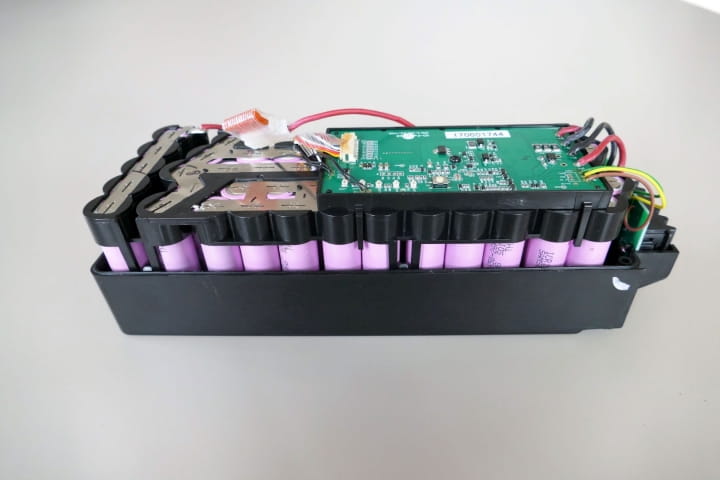
Nach dem Öffnen werden die Ladeelektronik einschließlich der Verkabelung sichtbar.
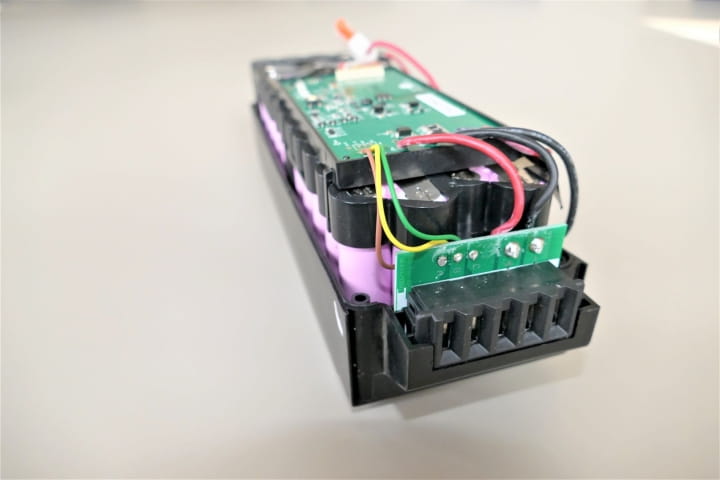
Die Kontaktbuchse allein ist mit 5 Drähten verlötet.
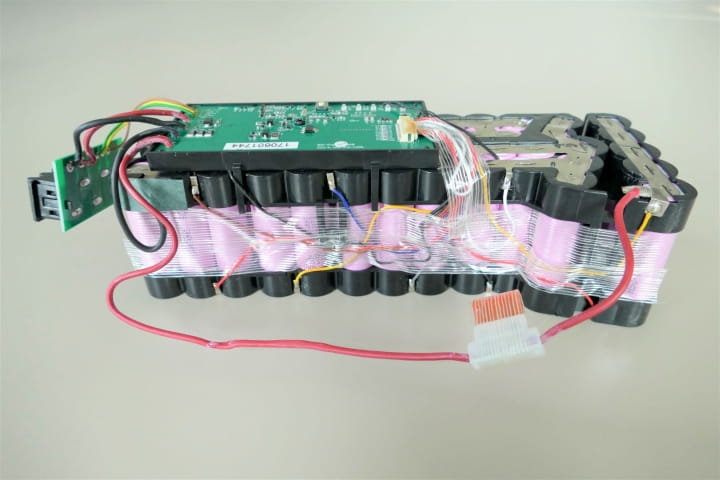
Verschiedene Drähte führen von der Leiterplatte zu den Zellen. Aufgrund der Anzahl der Drähte werden sie mit Klebeband befestigt.
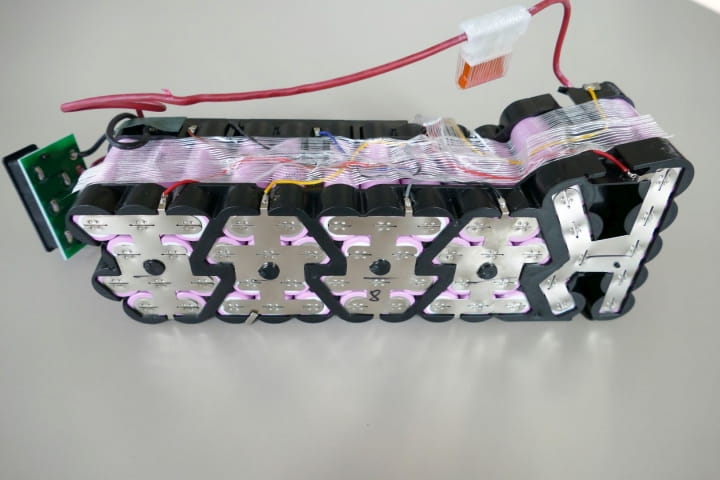
Man kann deutlich die in 10er-Blöcken angeordneten Zellen und die Verdrahtung erkennen. Aufgrund der Form des Gehäuses ist eine einheitliche rechteckige Anordnung nicht möglich.
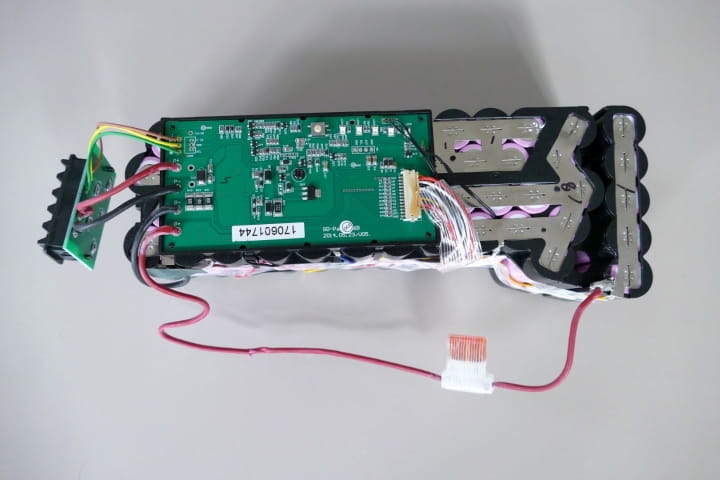
Die Leiterplatte mit der Elektronik wird präzise auf dem Zellenblock platziert.
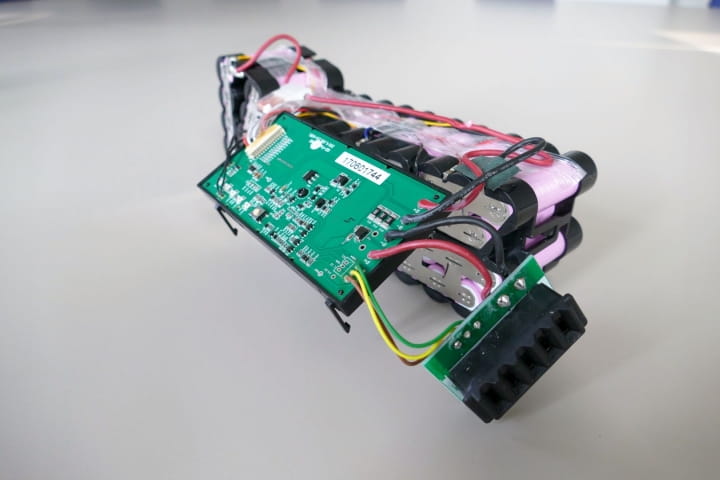
Die Leiterplatte wird mit Klammern befestigt, sodass sie sich einfach und schnell entfernen lässt.
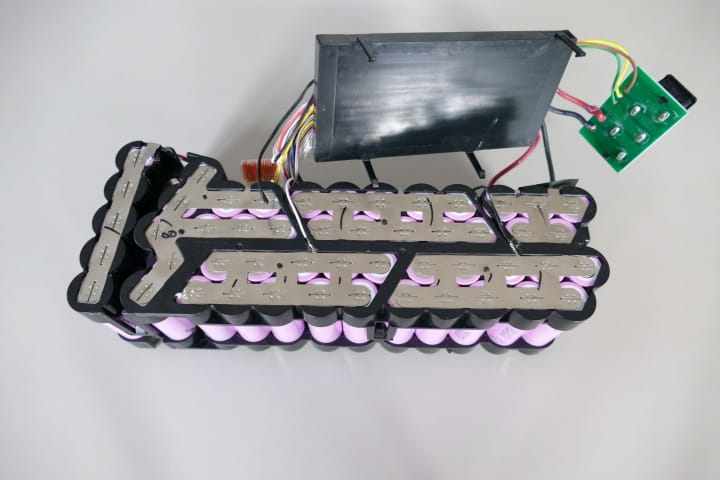
Aufgrund der speziellen Konstruktion sind die Anordnung und Verdrahtung der einzelnen Zellen komplexer, was den Austausch des Zellblocks erschwert. Auch hier sind die fein verlöteten Drähte sichtbar.
Wie Sie sehen können, ist das Innere eines E-Bike-Akkus recht komplex, und der Austausch des Zellenblock erfordert mindestens Lötwerkzeug und gute Kenntnisse der Elektrotechnik.
Hier finden Sie einige nützliche Videos und Forenbeiträge zu E-Bikes und DIY:
- https://www.youtube.com/user/ebikeundso/videos
- https://www.pedelecforum.de/forum/index.php?forums/akkus-batteriemanagement-bms-ladeger% C3%A4te.4/
Bitte beachten Sie jedoch, dass eine solche Umrüstung oder ein solcher Austausch immer auf eigene Gefahr erfolgt. Führen Sie solche Arbeiten nur durch, wenn Sie über die richtigen Lötwerkzeuge, das nötige Know-how und Erfahrung mit elektrischen Anlagen verfügen.
Haben Sie Fragen oder Anmerkungen zu diesem Beitrag? Dann schreiben Sie Ihre Gedanken und Vorschläge gerne in die Kommentare.
Das könnte Ihnen auch gefallen: Die große Akku-FAQ: Tipps & Tricks zur Akku-Pflege
War dieser Beitrag hilfreich?
Vielen Dank für Ihr Feedback!